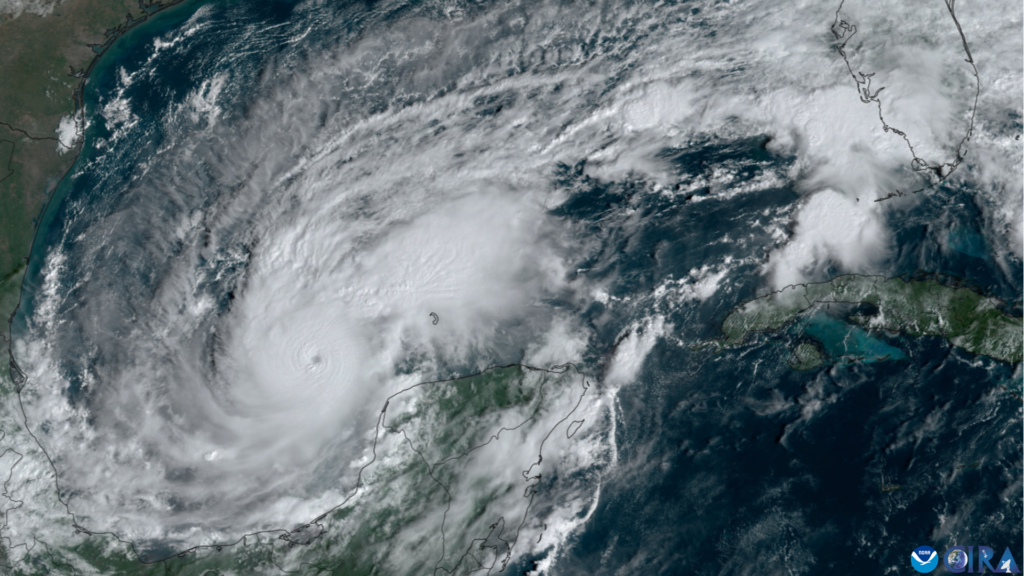
Hurricane Isaias surged toward the U.S. Gulf Coast on Thursday, the first hurricane of the Atlantic season, prompting mandatory evacuations and school closures in parts of Florida. The National Hurricane Center in Miami said the storm had maximum sustained winds around 75 mph and was moving east-northeast at 9 mph early Thursday.
Forecasters expect rapid intensification and a life-threatening storm surge for the Florida Panhandle, southern Alabama and southern Mississippi. Landfall on the northern Gulf Coast is expected late Friday or early Saturday, with heavy rain and flooding possible as far inland as the Tennessee Valley.
At least four Florida school districts canceled classes later in the week, and Okaloosa County ordered mandatory evacuations for some coastal areas. Florida Gov. Ron DeSantis declared a state of emergency for 25 Panhandle and Big Bend counties, and Alabama Gov. Kay Ivey issued one for 40 counties. The National Weather Service warned of possible long-duration power outages from Ocean Springs, Mississippi, to Gulf County, Florida.
The storm formed more than four months into the hurricane season, one day short of tying a 121-year-old record for the latest-forming hurricane in the area. The season has been unusually quiet because of a strong El Niño.
Oil producers shut down about 25% of Gulf oil production, roughly 511,000 barrels a day, according to the Marine Minerals Administration. Eight of the Gulf’s 371 manned platforms were evacuated.
In Pensacola, city officials provided sand for sandbags, and Mayor D.C. Reeves urged residents to check on older neighbors. “Obviously no need to panic at this point,” Reeves said. “This is really about preparation.”